Running a stone crusher plant is a tough business. Between the rising costs of diesel, high electricity bills, and expensive labor, your profit margins are constantly under pressure. In this industry, your profit is directly tied to your TPH (Tons Per Hour). If your TPH drops, your cost per ton goes up, and your profits shrink.
Many plant owners think the only way to get more output is to buy a bigger machine. But in reality, most plants are losing 15% to 20% of their capacity to bad feeding habits, worn-out parts, and poor maintenance.
How to Increase Production in Your Stone Crusher Plant
To increase production in a stone crusher plant, owners must ensure continuous feeding, replace worn-out jaw plates regularly, maintain the correct closed-side setting (CSS), and prevent vibrating screen blockages. By fixing these basic operational bottlenecks, you can maximize your TPH without buying new equipment.
If you are tired of your machine giving less output than it should, here is the complete guide to increasing your stone crusher plant’s daily production.
1. Keep a Continuous and Even Feed
The way you feed material into your primary crusher determines the efficiency of your entire plant. The hopper and feeder are the heartbeats of your operation.
The Problem:
Most untrained excavator or loader operators do one of two things wrong. They either dump too much large stone at once, which chokes the jaw crusher and forces it to stall, or they feed too slowly, leaving the crushing chamber half empty. When a crusher runs empty, you are burning electricity and diesel for zero output.
The Solution:
You must maintain a steady, continuous flow of stone.
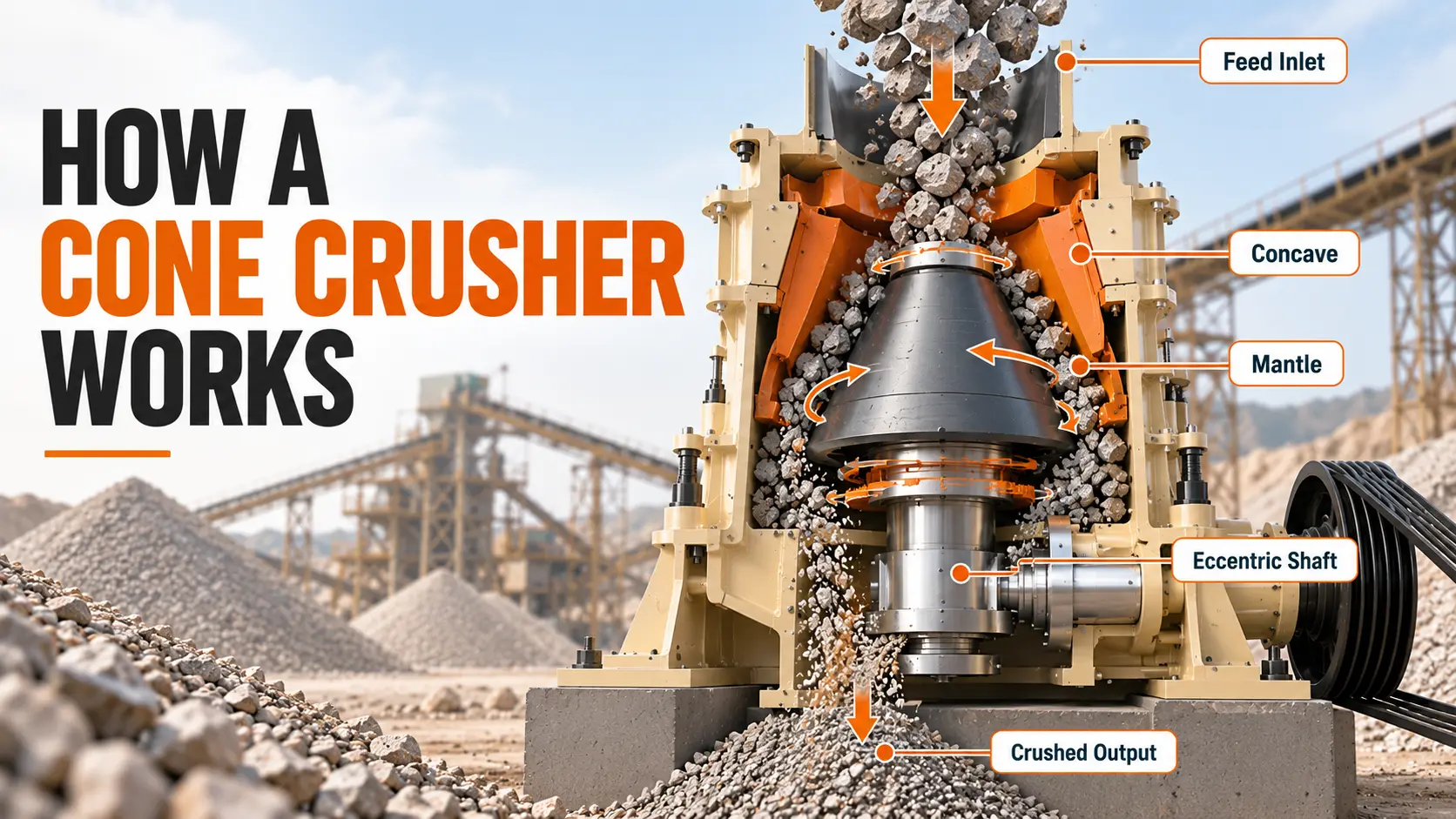
- Choke Feeding: For cone crushers, the chamber should ideally be kept 75 percent to 80 percent full. This is known as “choke feeding.” When the chamber is full, the stones actually crush against each other (rock-on-rock crushing), which improves the shape of your gitti and speeds up production.
- Match the Feeder Speed: Adjust your vibrating grizzly feeder (VGF) so the jaw crusher is always working but never overflowing.
- Remove Oversized Rocks: Do not let operators drop boulders that are larger than the jaw crusher’s opening. Trying to break a massive rock wastes time, damages the bearings, and brings your entire production line to a halt.
2. Check and Adjust the CSS (Closed-Side Setting) Daily
The Closed-Side Setting (CSS) is the gap at the bottom of your crusher when the jaw or cone is at its closest point. This gap controls the maximum size of the stone coming out of the machine.
The Problem:
As your machine crushes rock all day, the metal liners slowly wear down. When the metal wears down, the gap at the bottom gets wider. If you do not adjust this gap, your primary jaw crusher will start sending stones that are too big into your secondary cone or impact crusher. This overloads the secondary crusher, slows down the plant, and creates bottlenecks.
The Solution:
You must adjust the CSS regularly to keep the load balanced between all your machines.
- Measure Daily: Measure the CSS at the start of every single shift.
- How to Measure: The oldest and most reliable trick is to drop a piece of lead wire or a tight ball of clay tied to a string into the empty, running crusher. Pull it out and measure the crushed thickness. That is your true CSS.
- Balance the Load: A tighter CSS on the primary crusher means the secondary crusher has to do less work. Find the sweet spot where both machines are sharing the workload equally.
3. Change Worn-Out Wear Parts on Time
Trying to save money by running worn-out wear parts is the fastest way to lose money in a crusher plant.
The Problem:
When the “teeth” on your jaw plates become flat, or the mantle on your cone crusher loses its profile, the machine stops crushing the rock. Instead, it starts rubbing the rock. Rubbing does not break the stone efficiently. It creates huge amounts of useless dust, slows down the TPH, and puts extreme stress on the machine’s motor. You end up paying a massive electricity bill for a fraction of the output.
The Solution:
Treat your wear parts like the tires on a truck. When the grip is gone, they need to be replaced.
- Inspect Jaw Plates: Look at the corrugations (teeth) on the jaw plates. If the bottom third is completely flat, you are losing production.
- Flip the Plates: Do not wait for the bottom of the jaw plate to be destroyed. Flip the stationary and swing jaw plates midway through their life. This ensures even wear and gives you more days of high production.
- Monitor Amperage: Watch the amp meter on your control panel. If the motor is drawing high amps but the TPH is low, your wear parts are likely completely worn out.
4. Stop Screen Carryover (Keep the Meshes Clean)
Your vibrating screen separates the final gitti into the sizes you sell (like 10mm, 20mm, 40mm). It is the cash register of your plant.
The Problem:
During rainy seasons, or if you are crushing wet stone with a lot of clay, the small holes in the screen mesh get plugged up. This is called “blinding.” When the screen is blinded, good, perfectly sized stone cannot fall through to the stockpile. Instead, it gets carried over the top and sent back into the crusher on the return belt. You end up re-crushing good material, which wastes machine capacity and turns sellable stone into useless dust.
The Solution:
Keep the screens clear so every good stone makes it to the stockpile.
- Daily Cleaning: Have your workers brush down and clear the screen meshes at the end of every shift.
- Check Vibration: Ensure the screen is vibrating with enough force. If the belts are loose or the springs are broken, the screen will vibrate weakly, causing stones to get stuck.
- Use the Right Mesh: If blinding is a constant problem in wet conditions, switch to self-cleaning meshes or polyurethane (PU) screen panels, which vibrate differently and shed wet dirt faster than steel wire.
5. Prevent Conveyor Belt Slippage and Spillage
Conveyor belts are the arteries of your plant. If they stop, everything stops.
The Problem:
Loose conveyor belts slip on the drive pulleys, especially when loaded with heavy stone. This slows down the movement of material and causes bottlenecks. Furthermore, misaligned belts spill valuable stone onto the ground. Every ton of stone that falls off the belt is a ton you have to pay a worker to shovel back up.
The Solution:
Maintain tension and alignment.
- Adjust Tension: Check the tail pulleys weekly and tighten the belts to prevent slipping.
- Clean the Rollers: Dirt buildup on return rollers pushes the belt off-center. Keep the area under the conveyors clean so the rollers spin freely.
- Install Skirt Boards: Make sure rubber skirt boards at the feeding points are tightly sealed to prevent material from spilling off the sides.
6. Train Your Operators Properly
You can have the best equipment in the world, but if the man pushing the buttons does not care, your production will always be low.
The Problem:
Many operators simply turn the plant on, sit in the cabin, and look at their phones. They do not listen to the machine, and they do not react when a bottleneck starts forming. By the time the machine trips and shuts down, you have lost an hour of production.
The Solution:
Turn your operators into active problem solvers.
- Teach Them to Listen: A healthy crusher has a steady, rhythmic crushing sound. A choked crusher sounds strained and heavy. Train them to recognize the difference.
- Use a Daily Checklist: Do not rely on memory. Give the operator a laminated checklist to complete before hitting the start button every morning (e.g., check oil levels, check belt tension, clear the screen).
- Incentivize Output: If you want higher TPH, give the operator a reason to care. Offer a small monthly bonus if the plant hits a specific production target without major breakdowns.
Summary Checklist for Daily High Production
To get the most out of your crusher today, take a screenshot of this checklist and send it to your site manager:
- Feed evenly: Keep the primary hopper full but never overflowing.
- Choke feed the cone: Keep the secondary crusher 75 percent full for rock-on-rock crushing.
- Measure CSS daily: Adjust the gap every morning to balance the load.
- Check wear parts: If the jaw plates are flat, flip or replace them.
- Clean the screens: Clear blocked meshes every evening to prevent re-crushing good stone.
- Tighten belts: Stop conveyor slippage to keep material moving fast.
- Grease daily: Follow the exact lubrication schedule to prevent bearing failure.
Here are 5 frequently asked questions you can add to the end of the blog post, right before the conclusion. Each answer is kept highly concise (under 50 words) to capture quick AI search snippets and keep mobile readers engaged.
Frequently Asked Questions
-
What is the best way to feed a stone crusher?
Maintain a steady, continuous feed. Avoid dumping massive loads at once, which chokes the machine. For cone crushers, keep the chamber 75-80% full (choke feeding) to maximize rock-on-rock crushing and improve aggregate shape.
-
How often should I check the crusher’s CSS?
You should measure and adjust the Closed-Side Setting (CSS) daily, ideally at the start of every shift. A correct CSS prevents oversized stones from overloading your secondary crushers and keeps production high.
-
Why is my stone crusher producing too much dust?
Excessive dust usually means your wear parts (like jaw plates or cone mantles) are worn flat. Instead of breaking the stone, the machine is just rubbing it. Replace worn parts to restore crushing efficiency.
-
When should I change my jaw crusher plates?
Change or flip your jaw plates when the “teeth” on the lower third become completely flat. Running on flat plates wastes electricity, puts stress on the motor, and significantly reduces your daily TPH.
-
How do I stop good stone from returning to the crusher?
This happens when your vibrating screen meshes get blocked (blinded) with wet dirt or stone. Clean the screen meshes daily and ensure the screen has the correct vibration amplitude to shake stones loose.