In the complex world of industrial material processing, achieving precise fine particle separation is one of the most persistent challenges. Conventional screening equipment often struggles with fine, wet, or sticky materials, leading to inefficiencies, blocked meshes, and compromised product quality. Enter the high-frequency vibrating screen, a specialized solution engineered specifically to overcome these exact hurdles.
Whether you are operating a coal preparation plant, managing an aggregate washing facility, or processing industrial minerals, integrating the right vibrating screen technology is critical to maximizing throughput and return on investment (ROI). This comprehensive guide explores what high-frequency screens are, exactly how they function, their primary advantages, and their applications across various heavy industries.
What is a High Frequency Vibrating Screen?
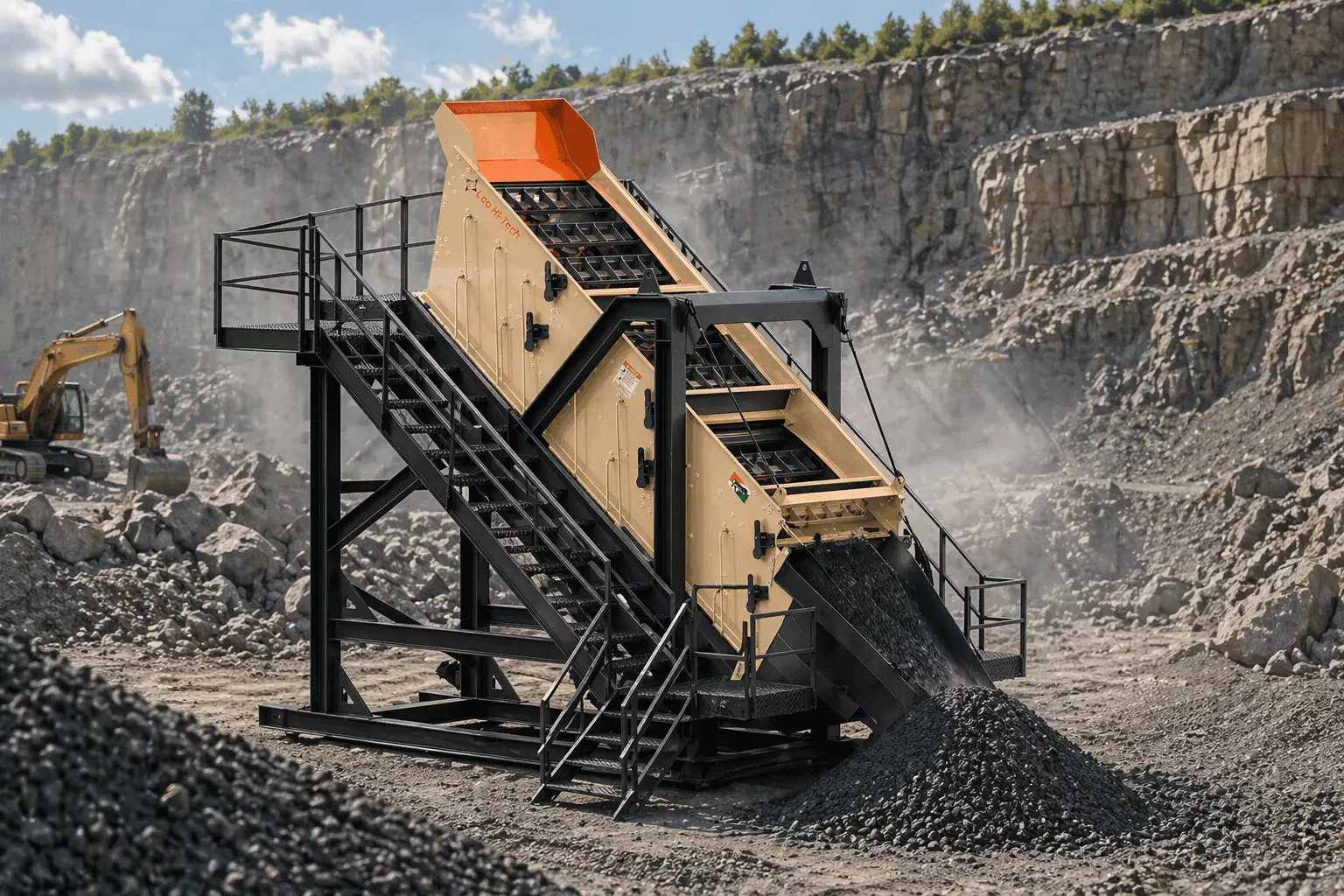
A high-frequency vibrating screen is an advanced classification machine designed for the highly efficient separation, sizing, and dewatering of fine materials typically those measuring less than 2mm in size.
Unlike conventional inclined or horizontal vibrating screens that utilize a heavy, sweeping motion (low speed and high amplitude) to move large rocks, a high-frequency screen operates on the opposite mechanical principle. It utilizes extremely high operational speeds combined with very low amplitude (a short stroke).
This aggressive, rapid vibration is strategically designed to break down the surface tension of materials. By doing so, it forces fine particles through the screen media while rapidly stratifying the material bed. This makes high-frequency vibrating screens the undisputed industry standard for handling slurries, manufacturing sand, and separating ultra-fine powders that would otherwise clog standard equipment.
How Does a High Frequency Vibrating Screen Work?
To understand how a high-frequency vibrating screen works, it is essential to look at how the vibrational energy is applied to the material.
Direct Vibration to the Screen Media
In a traditional rock screen, massive eccentric shafts or vibrating motors shake the entire heavy steel chassis of the machine. In contrast, high-frequency screens typically apply vibration directly to the screen media (the mesh or polyurethane panels) rather than the entire structural frame.
The machine relies on strategically placed electromagnetic vibrators or dual unbalanced motors operating at speeds generally ranging between 1,500 and 3,000 RPM (Revolutions Per Minute). The energy generated by these exciters is transmitted through a network of tappets or bridge structures directly to the screening surface.
Material Stratification and Fluidization
When raw material or slurry is fed onto the screen deck, the intense, localized G-forces produce a fluidizing effect on the material bed.
- Destruction of Surface Tension: In wet applications, the rapid vibration shatters the surface tension of the water, allowing liquid to separate from the solid particles.
- Rapid Stratification: Coarse particles are forcefully pushed to the top of the material layer, while the fine particles cascade down to the exact surface of the screen mesh.
- Passage: The fine, undersized particles effortlessly pass through the screen openings, while the oversize material is conveyed off the discharge end of the deck.
High Frequency vs. Conventional Vibrating Screens
Understanding the differences between these two types of industrial screens is crucial for specifying the correct equipment for your plant circuit. Below is a comparative breakdown of their operational characteristics.
| Feature / Specification | High-Frequency Vibrating Screen | Conventional Vibrating Screen (Inclined/Horizontal) |
| Primary Application | Fine particle separation, dewatering, slurries (< 2mm) | Coarse material sizing, scalping, large aggregates (> 2mm) |
| Operating Speed | High (1,500 – 3,000 RPM) | Low (750 – 1,200 RPM) |
| Vibration Amplitude | Very Low (1mm – 2mm stroke) | High (6mm – 12mm stroke) |
| Vibration Application | Applied directly to the screen media/deck | Applied to the entire machine chassis/frame |
| Energy Consumption | Low (moves less structural mass) | High (requires immense power to move heavy steel) |
| Dynamic Structural Load | Minimal (isolated vibration limits transfer to plant) | High (requires heavy-duty foundations and springs) |
| Risk of Screen Blinding | Extremely Low (intense vibration clears the mesh) | Moderate to High (especially with wet/sticky materials) |
Key Advantages of High Frequency Screening
Investing in high-frequency screening technology provides several distinct operational and financial benefits for processing plants.
1. Elimination of Screen Blinding and Pegging
“Blinding” occurs when fine, damp materials coat the screen mesh, closing off the open area. “Pegging” happens when near-size particles become wedged in the holes. The aggressive, rapid-fire vibration of a high-frequency screen physically ejects trapped particles and prevents moisture buildup, ensuring continuous open area and consistent screening efficiency.
2. Maximum Efficiency in Fine Classifications
When dealing with ultra-fine separation (such as 200-mesh sand), standard screens lose efficiency, leading to valuable material being lost to the waste pile. High-frequency units provide the exact physical environment required to separate fines accurately, increasing the yield of saleable products.
3. Reduced Power Consumption
Because the vibrating motors are only tasked with exciting the lightweight screen panels and the layer of material rather than vibrating tons of heavy steel side plates and cross members these machines require significantly smaller motors. This drastically lowers overall electrical consumption and reduces operating costs.
4. Lower Maintenance and Structural Wear
By isolating the vibrational energy from the main support frame, high-frequency screens transfer virtually zero dynamic load to the plant structure. This extends the lifespan of the machine’s steel components, reduces the need for heavy, expensive foundational concrete, and lowers the frequency of structural maintenance.
Primary Uses and Industrial Applications
High-frequency vibrating screens are highly versatile and are deployed across various sectors that demand rigorous material classification.
- Mining and Mineral Processing: They are heavily utilized in the beneficiation of iron ore, gold, copper, and zinc. They are also vital in coal preparation plants for recovering fine coal from slurries.
- Aggregate and Sand Production: In the production of manufactured sand (M-sand), these screens are used to remove ultra-fine dust and clay, ensuring the final product meets strict construction and concrete specifications.
- Dewatering and Tailings Management: They are highly effective at separating liquids from solid waste. Dewatering screens help mines recover process water for reuse and produce dry, manageable tailings cakes that are easier to dispose of.
- Chemical and Industrial Materials: Used for the precise classification of dry powders, glass sand, ceramics, fertilizers, and dry mortar mixes where strict sizing limits are required.
Frequently Asked Questions (FAQs) About Vibrating Screens
What causes vibrating screen blinding and how do high-frequency screens prevent it?
Blinding is primarily caused by excessive moisture in the feed material, which acts as a binding agent, causing fine dust to stick to the screen wires and eventually bridge across the openings. High-frequency screens prevent this by utilizing high-RPM vibration that overcomes the adhesive forces of the moisture. The rapid movement essentially “shakes off” the moisture and keeps the screen wires clean, maintaining a high percentage of open area.
Which screen media is best for high-frequency applications?
The choice of screen media depends on the specific material being processed. Polyurethane screen panels are widely considered the best option for wet, highly abrasive applications (like mining slurries) due to their exceptional wear life and flexibility, which aids in self-cleaning. For dry, fine classifications where maximum open area is the priority, high-tensile woven wire cloth or fine stainless steel mesh is often preferred.
How do you calculate vibrating screen capacity?
Calculating vibrating screen capacity is a complex process that relies on a base formula adjusted by multiple efficiency factors. The fundamental formula is Capacity (Tons Per Hour) = A × B × C × D × E × F × G × H × I × J.
- A represents the basic capacity per square foot of screen area based on the desired cut size.
- The subsequent variables (B through J) are modifying factors that account for specific conditions: the percentage of oversize material, half-size material, material bulk density, moisture content, screen deck angle, particle shape, and the type of screen media used. Due to the complexity, plant engineers typically use specialized manufacturer software to model screen capacity accurately.