Whether you are breaking ground on a new mining operation, expanding a quarry, or upgrading an aggregate production plant, choosing the right crushing equipment is the most critical decision you will make. The comminution process reducing large rocks into usable sizes dictates your plant’s efficiency, operational costs, and final product quality.
When it comes to processing hard rock and abrasive materials, two machines dominate the industry: the jaw crusher and the cone crusher. But how do you choose between them?
In this comprehensive guide, we will break down the cone crusher vs jaw crusher debate, exploring their operational principles, ideal applications, and operational costs to help you maximize your reduction ratio and plant profitability.
What is a Jaw Crusher? The Primary Workhorse
A jaw crusher is a heavy-duty compression machine primarily used in the primary crushing stage. If you have large, freshly blasted rock coming straight from the mine or quarry face, the jaw crusher is usually the first machine it encounters.
How It Works
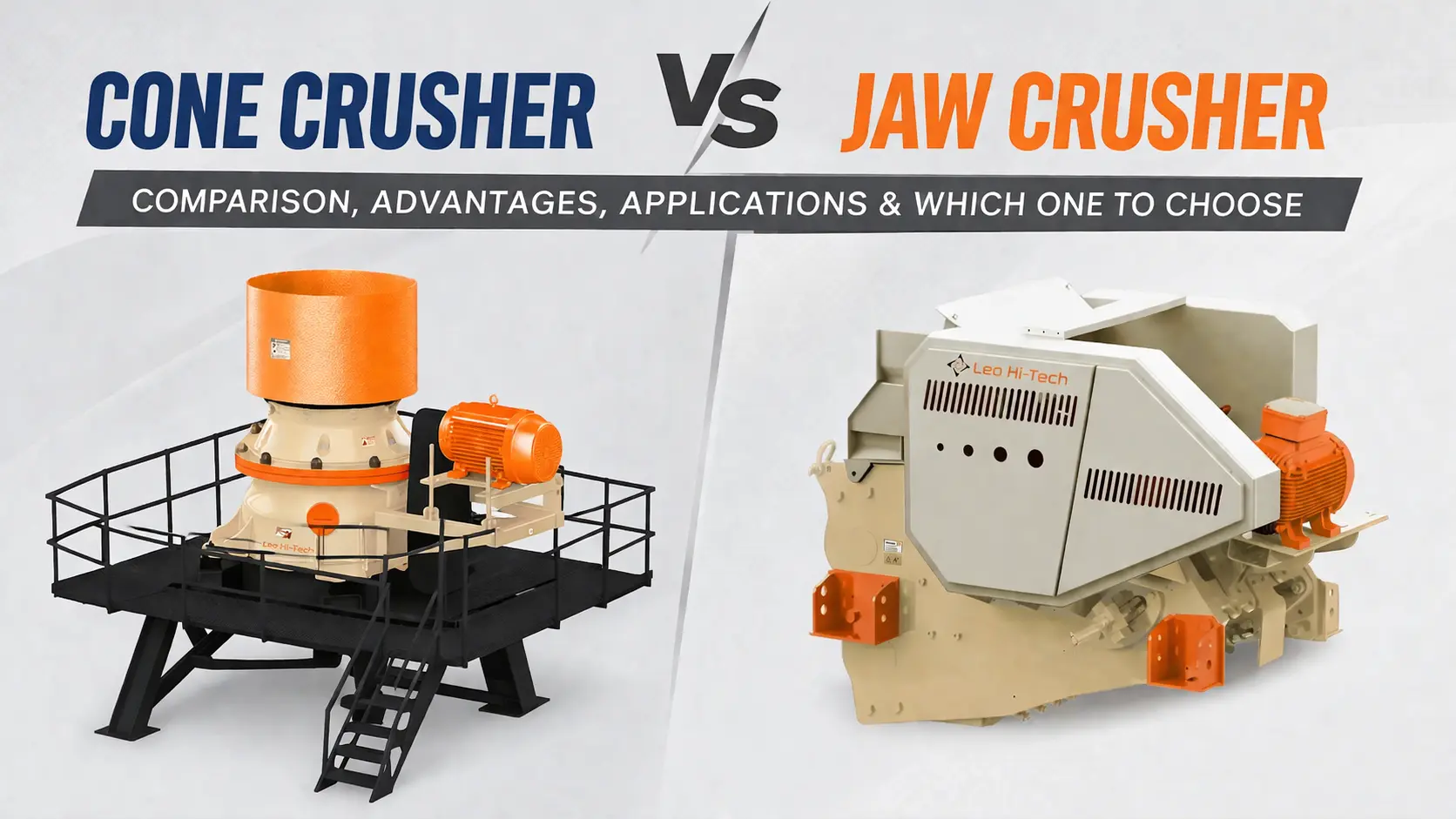
The jaw crusher operates on a simple but brutally effective principle of compression. It features a V-shaped crushing chamber formed by two heavy-duty steel plates (jaws). One jaw is stationary (fixed jaw), while the other (swing jaw) moves back and forth on an eccentric shaft. As material enters the top of the chamber, it is crushed between the jaws until it is small enough to fall through the discharge opening at the bottom.
Key Advantages
-
Massive Feed Size Acceptance
Jaw crushers are designed to handle massive, bulky rocks that other rock crushers simply cannot accommodate.
-
High Reliability
With fewer moving parts than other mining machinery, they are highly reliable and easier to maintain.
-
Excellent for Hard Rock
They excel at processing materials with high compressive strength, such as granite, basalt, quartz, and heavy construction demolition debris.
The Downside
Jaw crushers tend to produce a flaky, elongated, or slabby output shape. While this is fine for a primary reduction stage, it is usually not suitable for final aggregate products used in concrete or asphalt.
What is a Cone Crusher? The Secondary Specialist
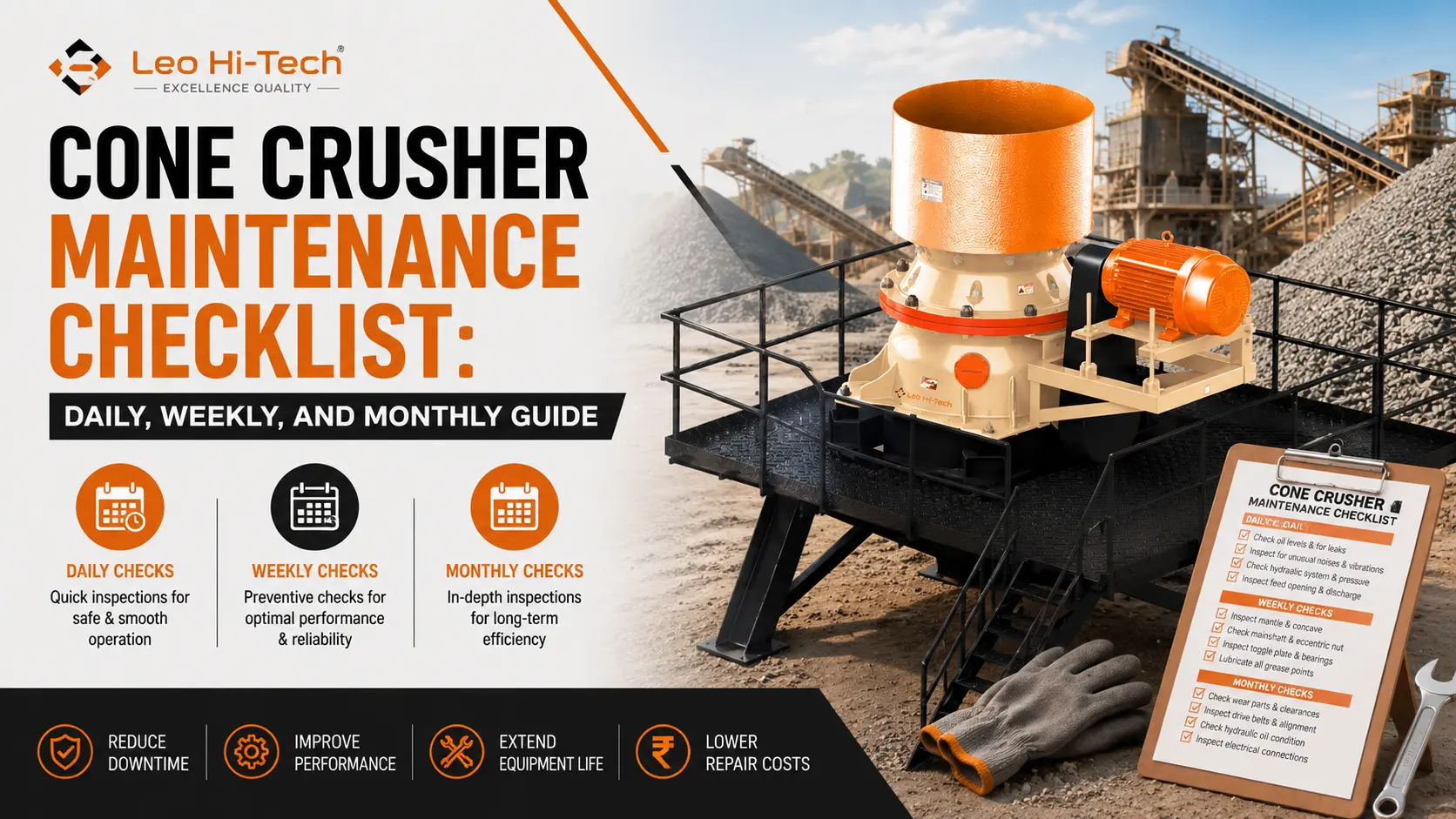
While the jaw crusher does the heavy lifting, the cone crusher is the precision instrument of the crushing circuit. It is primarily utilized for secondary crushing or tertiary crushing stages, taking the medium-sized output from the jaw crusher and refining it further.
How It Works
A cone crusher also operates by compression but uses a different geometry. It consists of a spinning, oscillating cone (the mantle) inside a stationary, bowl-shaped ring (the concave or bowl liner). As rock falls into the top, it is squeezed between the rotating mantle and the bowl liner. Because the mantle moves eccentrically, the rock is continuously crushed and ground as it works its way down to the discharge opening.
Key Advantages
-
Superior Product Shape
The continuous, multi-directional crushing action produces a highly uniform, cubical output. This is essential for meeting strict aggregate production specifications.
-
High Reduction Ratio
Cone crushers can achieve very fine product sizes, making them highly efficient for secondary reduction.
-
Tramp Iron Protection
Modern cone crushers feature hydraulic relief systems that allow uncrushable materials (like stray excavator teeth) to pass through without damaging the machine.
The Downside
Cone crushers cannot accept extremely large feed sizes. They are also mechanically complex, meaning their initial capital expenditure (CAPEX) and maintenance requirements are generally higher than those of jaw crushers.
Head-to-Head Comparison: Jaw vs. Cone Crusher
To help you quickly understand the core differences, here is a side-by-side comparison of the two machines:
| Feature | Jaw Crusher | Cone Crusher |
| Crushing Stage | Primary Crushing | Secondary & Tertiary Crushing |
| Operating Principle | Compression (Oscillating V-chamber) | Compression (Eccentric rotating cone) |
| Maximum Feed Size | Very Large (up to 40+ inches depending on model) | Medium to Small (typically under 10-12 inches) |
| Output Particle Shape | Often flaky, slabby, or elongated | Highly uniform, cubical |
| Reduction Ratio | Standard (Typically 3:1 to 6:1) | High (Typically 4:1 to 8:1) |
| Maintenance Complexity | Low to Moderate (Easier access to wear parts) | High (Requires specialized knowledge/tools) |
| Ideal Materials | Blasted hard rock, concrete, ores | Pre-crushed hard rock, river gravel, abrasive ores |
Key Differences Explained
When deciding between a cone crusher and a jaw crusher, or evaluating which machine offers lower operating costs, the answer lies in understanding how these machines interact within a larger comminution circuit.
-
Feed Size and Position in the Circuit
This is the most critical distinction. You cannot feed one-meter-wide boulders into a standard cone crusher; it will jam or break. A jaw crusher is mandatory at the front of the line to take the “run-of-mine” material and reduce it to a manageable size (usually 4 to 8 inches). The cone crusher then takes over to size the material down to final market specifications (e.g., 3/4 inch or 1/2 inch aggregates).
-
Output Quality and Shape
If you are producing aggregate for road construction, asphalt, or structural concrete, particle shape matters. Civil engineers require cubical stones because they interlock better and provide higher structural integrity. Jaw crushers produce slabs; cone crushers produce cubes. Therefore, a cone crusher is almost always required to “shape” the final product.
-
Maintenance and Operating Costs (OPEX)
Jaw crushers have high wear on their jaw plates, but replacing them is relatively straightforward. Cone crushers suffer wear on the mantle and bowl liners, and because they operate at higher speeds with complex hydraulic and lubrication systems, routine maintenance requires more downtime and highly skilled technicians. However, the higher value of the premium cubical aggregate produced by the cone crusher usually offsets these maintenance costs.
How to Choose the Right Crusher for Your Project
Choosing between a cone crusher and a jaw crusher isn’t usually an “either/or” scenario it is a “when and where” scenario.
- Choose a Jaw Crusher if: You are setting up a primary crushing station, your feed material consists of large blasted rocks, or you are running a concrete recycling operation where rebar might be present.
- Choose a Cone Crusher if: You already have a primary crusher in place, you need to produce high-quality, cubical aggregates, or you are processing highly abrasive materials like river gravel where impact crushers would suffer excessive wear.
The Golden Rule of Crushing
In most large-scale quarrying and mining machinery setups, these two work in harmony. The jaw crusher takes the big bites, and the cone crusher chews the material down to the perfect final size.
Frequently Asked Questions (FAQs)
What is the main difference between a jaw crusher and a cone crusher?
The main difference lies in their application and design. Jaw crushers are primary crushers designed to break large, bulky rocks into smaller pieces using two compressing plates. Cone crushers are secondary crushers that take those smaller pieces and grind them into fine, uniform, cubical aggregates using a rotating cone inside a bowl.
Can a cone crusher be used as a primary crusher?
Generally, no. Standard cone crushers have a restricted feed opening and cannot accept large boulders. However, massive specialized machines known as gyratory crushers (which function similarly to cone crushers but have steep, open cavities) are sometimes used for primary crushing in extremely high-capacity mining operations.
Which crusher is better for hard rock?
Both are excellent for hard rock. The jaw crusher is better for large hard rock, while the cone crusher is better for reducing that hard rock down to final product sizes. Neither relies on impact (like horizontal shaft impactors do), making them both highly resistant to abrasive wear from hard stones like granite or quartzite.
Why are cone crushers more expensive to maintain?
Cone crushers operate at high speeds and feature complex internal engineering, including pressurized lubrication systems, hydraulic tramp iron release systems, and intricate bronze bushings. Maintaining these precise tolerances requires specialized labor and more expensive replacement parts compared to the relatively simple toggle-and-jaw mechanism of a jaw crusher.
What is a “reduction ratio” in rock crushers?
The reduction ratio is the ratio between the maximum size of the feed material and the maximum size of the crushed product. For example, if a jaw crusher takes in 20-inch rocks and outputs 5-inch rocks, it has a reduction ratio of 4:1. Cone crushers typically offer slightly higher reduction ratios than jaw crushers in their respective stages.