Investing in an aggregate crushing plant setup is a massive capital expenditure. For plant managers, procurement officers, and site engineers, the difference between a highly profitable operation and a logistical money pit often comes down to equipment selection. Choosing the wrong machine leads to excessive downtime, skyrocketing maintenance costs, and a final product that fails to meet stringent construction standards.
To ensure maximum efficiency and profitability, you need a systematic approach to selecting your equipment.
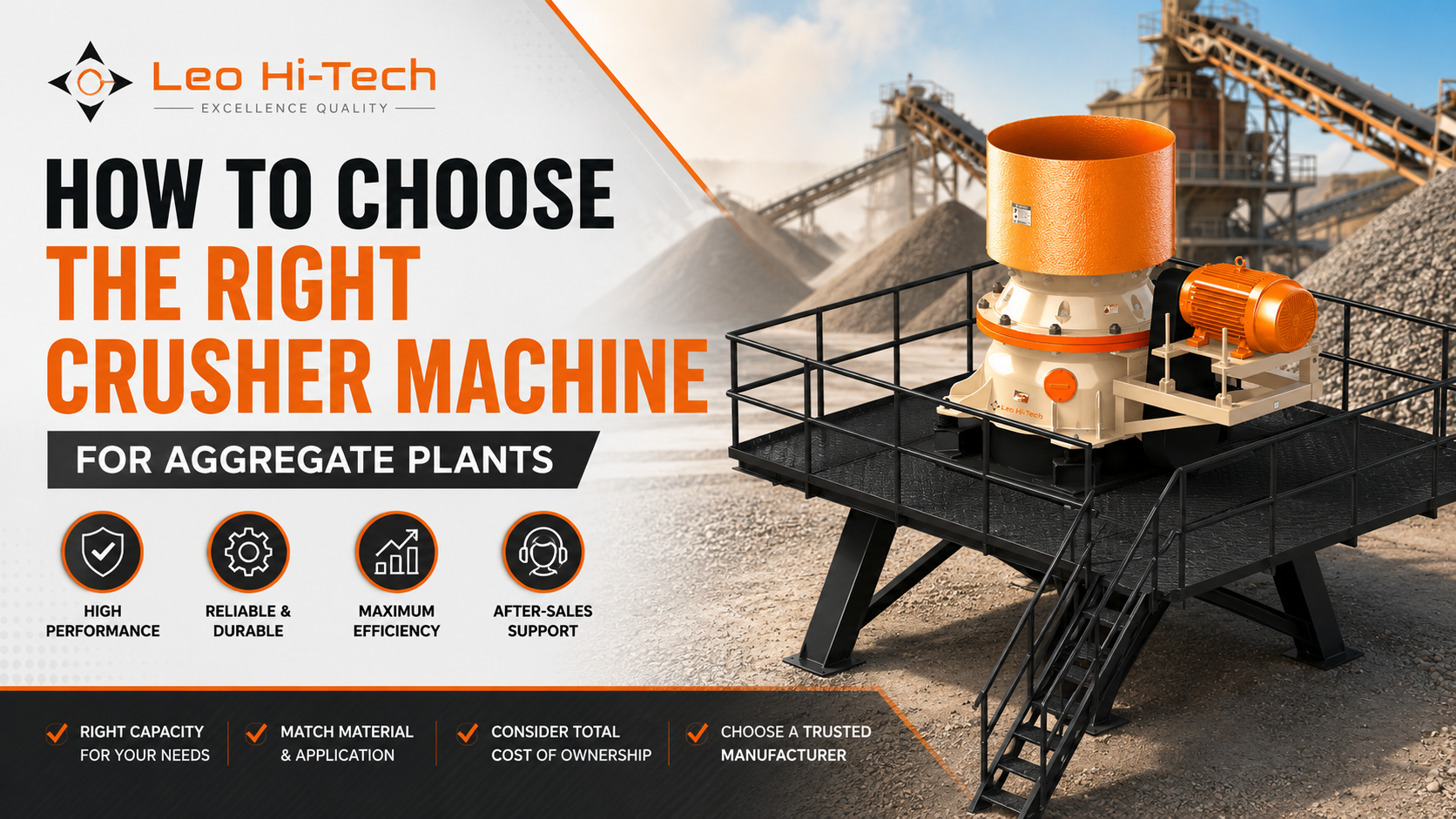
How do you select the right crusher for an aggregate plant?
To choose the right aggregate crusher, you must evaluate four primary factors: the hardness and abrasiveness of the raw material, the maximum feed size, the required production capacity (measured in Tons Per Hour or TPH), and the desired final product shape (cubicity). Typically, a jaw crusher is used for primary crushing, followed by a cone or impact crusher for secondary and tertiary stages.
Below is the definitive, step-by-step methodology for evaluating your site’s specific needs and selecting the right crusher machine.
Step 1: Analyze Your Raw Material (Hardness & Abrasiveness)
The very first step in choosing a crusher is deeply understanding the geology of the rock you intend to process. Not all rocks are created equal, and putting the wrong rock into the wrong crusher is a recipe for disaster.
Compressive Strength (Hardness)
Rock hardness is generally measured in Megapascals (MPa).
- Hard Rocks (e.g., Granite, Basalt, Quartzite): These materials possess high compressive strength and require heavy-duty compression crushers, such as Jaw Crushers or Cone Crushers. These machines crush the rock by squeezing it between two hard surfaces.
- Soft to Medium-Hard Rocks (e.g., Limestone, Dolomite): These can be effectively processed using Impact Crushers (like Horizontal Shaft Impactors). Impact crushers use the force of high-speed collision to shatter the rock along its natural cleavage lines, offering excellent reduction ratios.
Abrasiveness (Silica Content)
Abrasiveness is just as critical as hardness. Materials with high silica content, like river gravel or certain sandstones, are highly abrasive. If you feed highly abrasive material into an impact crusher, the blow bars will wear out in a matter of days, driving up your operating expenses astronomically. For abrasive materials, compression crushers (Jaw and Cone) are mandatory to keep wear-and-tear costs manageable.
Step 2: Determine Maximum Feed Size and Desired Output
The physical dimensions of your input and your required output will dictate the size and type of your crushers.
Maximum Feed Size and The Gape
How large is the rock coming directly from the quarry after blasting? Your primary crusher must have a feed opening known as the “gape” large enough to accept the biggest boulders without bridging or blocking. As a rule of thumb, the maximum feed size should not exceed 80% to 85% of the crusher’s feed opening to prevent blockages and maintain steady throughput.
Desired Output and Reduction Ratio
What is your final product? Are you producing 20mm and 10mm aggregates for road base, or are you manufacturing manufactured sand (M-sand)? Every crusher has a “reduction ratio” (the ratio of feed size to product size).
- Jaw crushers typically offer a reduction ratio of 4:1 to 6:1.
- Impact crushers can offer ratios up to 10:1 or 15:1.
- Attempting to force a single machine to reduce a 500mm boulder down to 20mm aggregate will result in immense mechanical stress and an overproduction of unusable dust. This is why crushing must be done in stages.
Step 3: Calculate Production Capacity (TPH)
Your crushing plant’s capacity is measured in Tons Per Hour (TPH). You must accurately calculate the TPH required to meet your contractual obligations and ensure plant profitability.
However, capacity calculation isn’t just about picking a crusher that says “200 TPH” on the spec sheet. You must account for surges and bottlenecks.
- The Choke Feeding Principle: Cone crushers, for example, operate most efficiently when they are “choke fed” (keeping the crushing cavity constantly full).
- System Harmony: Your primary crusher’s output must match the intake capacity of your secondary crusher, and your conveyor belts and vibrating screens must be sized to handle the continuous load without overflowing.
Step 4: Map Out the Crushing Stages
Efficient aggregate production is a multi-stage process. Depending on your feed size and final product requirements, your plant will likely require a combination of the following stages:
| Crushing Stage | Purpose in the Plant | Ideal Crusher Machine | Typical Material Focus |
| Primary Crushing | Receiving blasted rock and reducing it to a manageable size for conveyors. | Jaw Crusher, Primary Gyratory Crusher | Large feed size, high hardness, abrasive rocks. |
| Secondary Crushing | Further reduction and initial shaping of the aggregate. | Cone Crusher, Primary Impact Crusher | Medium feed, preparing material for final screening. |
| Tertiary Crushing | Fine crushing, manufacturing sand, and maximizing cubicity. | VSI (Vertical Shaft Impactor), Short Head Cone | Strict shape requirements, fine aggregates, M-Sand. |
Step 5: Evaluate Total Cost of Ownership (TCO)
Procurement teams often make the mistake of choosing a manufacturer based solely on the initial capital expenditure (CapEx). However, the initial purchase price is only a fraction of the Total Cost of Ownership (TCO). When evaluating crusher machines, you must calculate:
- Wear Parts Consumption: How frequently will you need to replace jaw dies, cone mantles, or impactor blow bars? What is the local availability and cost of these cast parts?
- Energy Consumption: Crushers require massive amounts of power. Compare the kilowatt-per-ton (kW/t) efficiency ratings between different manufacturers.
- Maintenance Accessibility: When a machine jams or a part needs replacing, how easily can your maintenance crew access the internal chamber? Look for machines with hydraulic clearing and easy-access maintenance doors, as downtime directly equates to lost revenue.
Why Cubicity Matters in Aggregate Production
In the modern construction and infrastructure sectors, the shape of the final aggregate is just as important as its size. “Cubicity” refers to aggregates that are roughly cubical in shape, rather than flat or elongated (flaky).
Why does this matter? Concrete and asphalt mixes rely on the interlocking strength of the aggregates. Flaky and elongated rocks break easily under pressure, reducing the structural integrity of the concrete and requiring more cement paste to bind them, which drastically increases costs for the concrete producer.
If your market demands strict compliance with flakiness and elongation indices, you will almost certainly need to integrate a Vertical Shaft Impactor (VSI) in your tertiary crushing stage. VSIs hurl rocks against each other at high speeds (rock-on-rock crushing), chipping away sharp edges and producing perfectly cubic aggregates and high-quality manufactured sand.
Integrating Vibrating Screens into Your Setup
A crusher machine is only as efficient as the screening equipment sorting its output. If your vibrating screens are undersized or inefficient, perfectly crushed material will be sent back through the crusher (a closed circuit), leading to over-crushing, excessive fines generation, and wasted energy.
When designing your plant, pair your crushers with properly sized, high-frequency vibrating screens. Ensuring the right mesh size and deck configuration will dramatically improve your plant’s overall TPH and ensure that your final product meets exact sizing specifications.
Frequently Asked Questions (FAQ)
-
What is the difference between a jaw crusher and a cone crusher for aggregate?
A jaw crusher is typically used for primary crushing to break down large, hard boulders into manageable pieces. A cone crusher is used for secondary or tertiary crushing to take those manageable pieces and crush them down into smaller, final aggregate sizes.
-
What is the best crusher machine for river gravel?
Because river gravel is highly abrasive due to its high silica content, compression crushers are the best choice. A typical setup for river gravel involves a jaw crusher for primary reduction and a cone crusher for secondary reduction to minimize wear costs.
-
How can I maximize the lifespan of my crusher wear parts?
To extend wear part life, ensure the machine is consistently fed (choke feeding for cones), maintain a steady and even feed distribution across the crushing chamber, avoid letting uncrushable metals (tramp iron) enter the machine, and choose the correct manganese alloy for your specific rock type.
-
What is a good reduction ratio for a primary crusher?
For a primary jaw crusher, a standard reduction ratio is typically between 4:1 and 6:1. This means if your maximum feed size is 400mm, the output size will generally be around 100mm to 65mm.
-
How do I know if I need a VSI (Vertical Shaft Impactor) crusher?
You need a VSI crusher if your buyers (like ready-mix concrete plants or asphalt producers) have strict requirements for aggregate cubicity, or if you intend to produce high-quality manufactured sand (M-sand) from the excess smaller material in your plant.