A cone crusher looks like a single heavy machine from the outside, but inside it is a carefully balanced assembly of wear parts, rotating components, structural castings, and support systems. Each part has a specific job, and each one fails in its own way. Operators and maintenance teams who know these parts can plan spare parts, spot early warning signs, and avoid the long breakdowns that come from neglected components.
This guide walks through the main cone crusher parts and components, explains what each one does, and shows what to look for as it wears. It is written for plant owners, maintenance engineers, and buyers who want a practical understanding of what they are paying for and maintaining.
How the Parts Fit Together
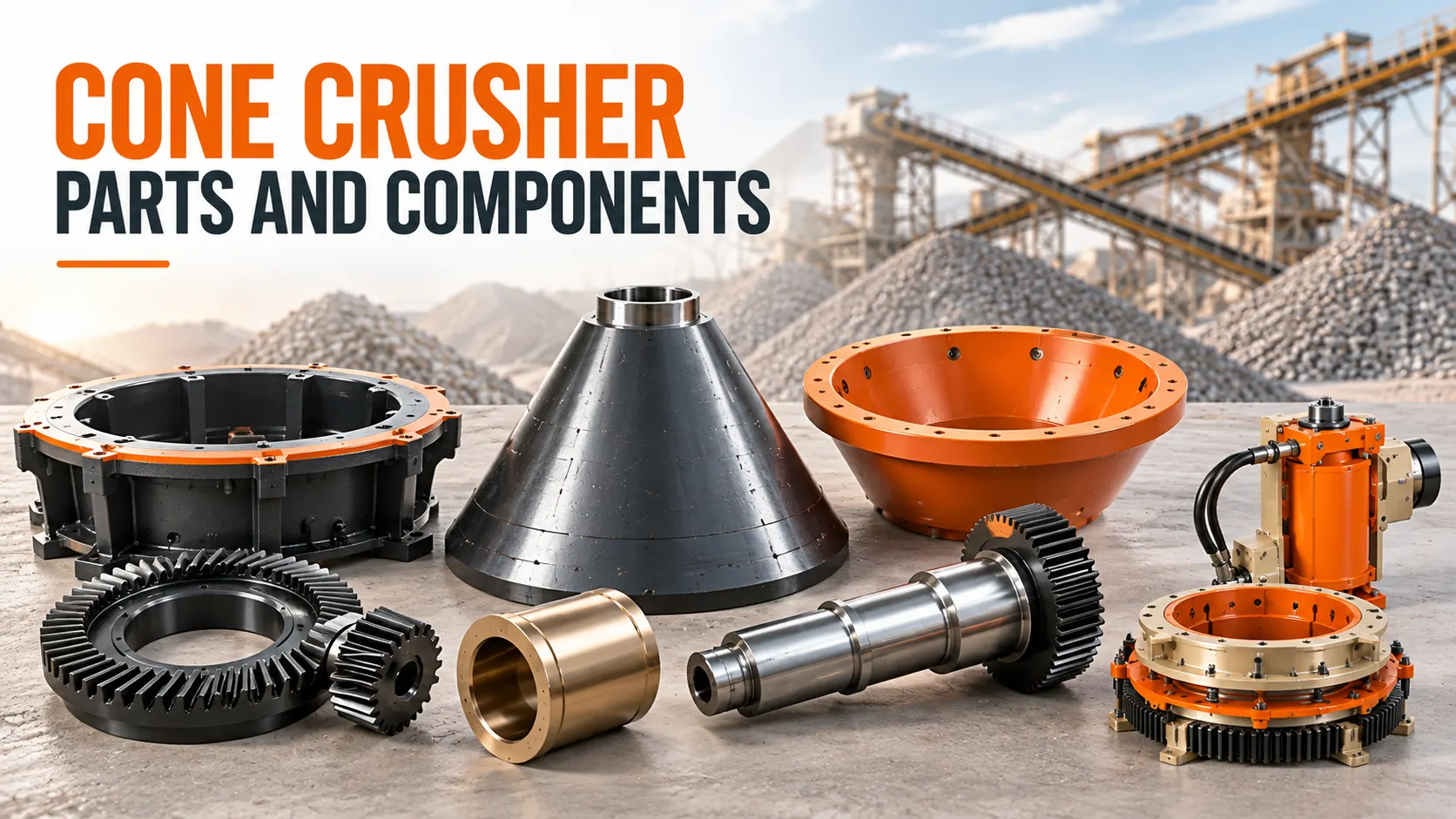
A cone crusher has four working groups: the crushing parts (mantle and concave), the moving assembly (main shaft, head, and eccentric bushing), the drive and support parts (countershaft, gears, frame, and adjustment ring), and the protection and lubrication systems. Some components are consumable wear parts that you will replace many times. Others are long-life parts that should last for years if the machine is operated and lubricated properly.
Crushing Chamber Parts
-
Mantle
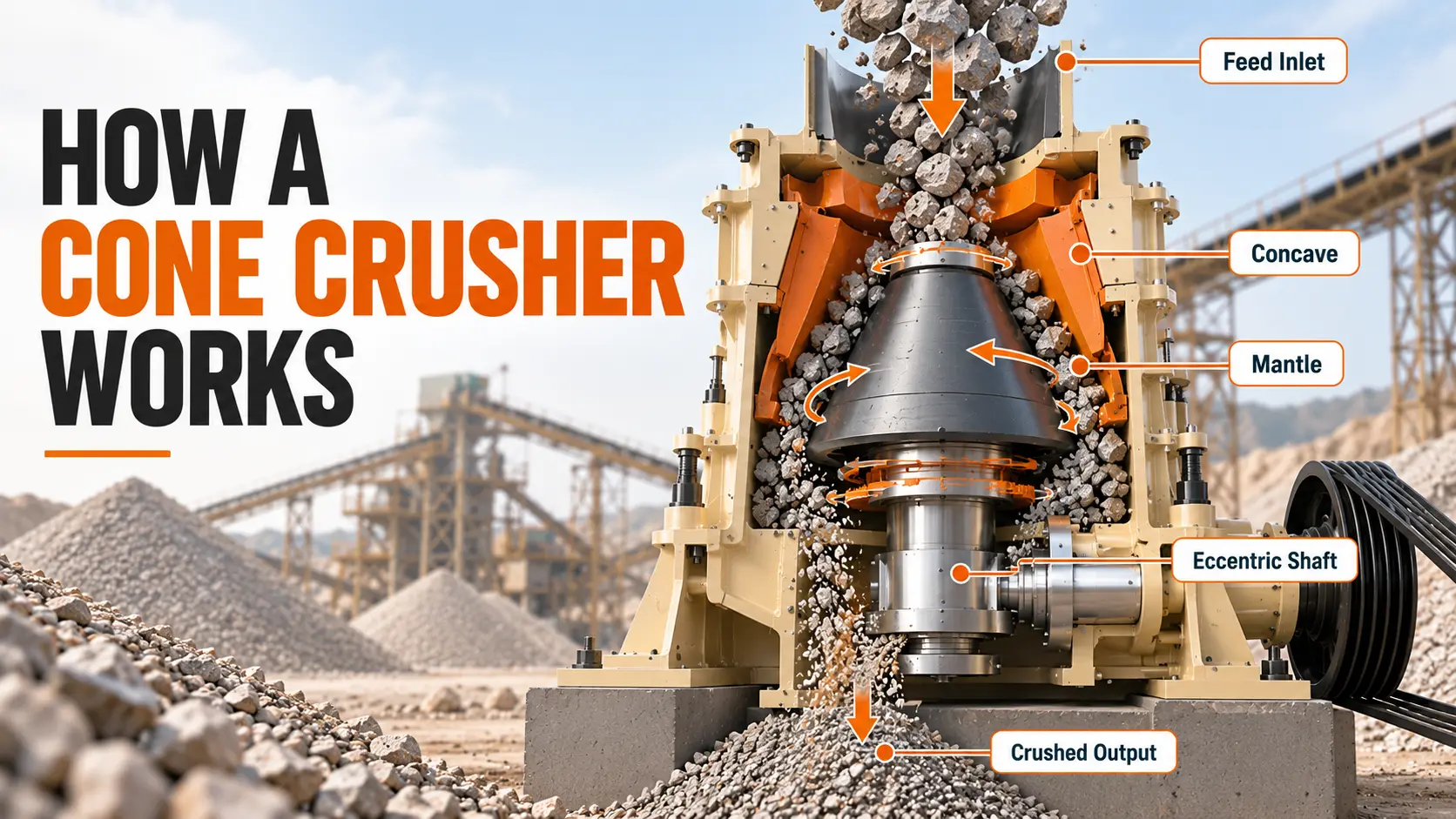
The mantle is the moving, cone-shaped liner fixed to the head of the main shaft. It is the surface that squeezes the rock against the concave. Mantles are normally cast from high manganese steel, which work-hardens under impact and compression, so the surface becomes harder in service while the core stays tough.
The mantle is a primary wear part. Its profile changes gradually as it wears, which opens the closed side setting and changes capacity and product size. Measure wear regularly and plan replacement before the liner wears through to the backing material or the head.
The mantle is held in place by the head nut and supported by a backing compound, usually epoxy resin in modern practice, that fills the gap between the liner and the head. Poor or uneven backing can let the liner move, causing cracks and damage to the head.
-
Concave (bowl liner)
The concave is the fixed liner mounted inside the bowl or upper frame. Together with the mantle it forms the crushing chamber. It is also made from manganese steel and wears fastest in the zone where most of the crushing takes place.
Concaves come in different profiles, commonly coarse, medium, fine, and extra fine. Changing the concave changes the feed opening, the shape of the parallel zone, capacity, and product size. This is how a single crusher can be adapted for different stages or products. Always match the mantle and concave as a set designed for the same chamber.
-
Feed hopper and distribution plate
The hopper guides material into the crusher. Beneath it, the distribution plate, which sits on top of the head, spreads feed evenly around the chamber. A worn or damaged distribution plate causes uneven feeding, which leads to uneven liner wear and unbalanced loads. It is cheap compared with other parts, so replace it as soon as it is worn.
Moving Assembly
-
Main shaft and head
The main shaft carries the head and mantle and transmits crushing force down into the support system. The top of the shaft pivots while the bottom is moved around a small circle by the eccentric. Because it carries the crushing load, the shaft is made from forged, heat-treated alloy steel.
Shaft damage is serious. Bending or cracking is usually linked to repeated tramp metal events or overloading. Protecting the shaft with proper feed control and metal detection is much cheaper than repair.
-
Eccentric bushing
The eccentric bushing is a heavy rotating sleeve with an off-centre bore. As it turns, it moves the bottom of the main shaft in a circle, creating the gyratory motion. The amount of offset sets the throw of the crusher, which affects capacity and product size.
It normally runs on bronze bushings and depends entirely on a steady supply of clean, cool oil. Heat, dirt, or oil starvation can wear or seize these surfaces quickly. Rising oil temperature, metal particles in the oil, or unusual noise from the lower part of the machine are warning signs that deserve immediate attention.
-
Thrust bearing and socket liner
These components carry the vertical load and allow the head to swing smoothly. The thrust bearing supports the weight of the head and the downward crushing force, while the socket liner and head centre provide the pivot at the top. They are wear parts with a defined service life and are replaced during major overhauls.
Drive and Support Components
-
Countershaft and gear set
The horizontal countershaft receives power from the motor through a pulley and V-belts or a coupling. A pinion at its inner end drives a large bevel gear fixed to the eccentric bushing, which reduces speed and delivers torque to the eccentric.
The pinion and gear are a matched pair, so they are replaced together. Check tooth wear, gear mesh, and backlash during overhauls, and listen for knocking or whining that may indicate damaged teeth or worn countershaft bearings. Countershaft bushings and housing seals also need regular inspection for wear and oil leaks.
-
Main frame and upper frame
The main frame is the heavy cast or fabricated steel body that houses the shaft, eccentric, and drive. The upper frame, also called the bowl or top shell, supports the concave and carries the adjustment mechanism. Frames take the crushing loads and must stay rigid. Cracks, loose bolts, or worn frame liners should be addressed early, because they let components move out of alignment.
-
Adjustment ring and setting mechanism
Product size is controlled by setting the closed side setting. In many machines this is done by turning a threaded adjustment ring so that the bowl moves up or down. In hydraulic machines the setting may be changed with a hydraulic motor, cylinders, or by raising or lowering the main shaft. Clean, well-greased threads and working lock mechanisms are important, because dust and fines can jam the ring.
Protection and Lubrication Components
-
Tramp release system (springs or hydraulics)
Every cone crusher needs a way to pass uncrushable material. Spring models use a set of heavy springs that clamp the bowl against the frame and compress when tramp metal enters. Hydraulic models use cylinders and accumulators that release oil under overload and return to position afterwards. The choice affects cost, adjustment speed, and automation options, and is covered in our guide to spring vs hydraulic cone crushers.
-
Lubrication system
The lubrication system is the lifeline of the machine. A separate unit typically includes an oil tank, pump, filters, cooler, and often a heater for cold starts. It delivers a continuous flow of clean oil to the eccentric, gears, and bearings. Monitor oil flow, temperature, and pressure at all times, and change oil and filters on schedule. Oil contamination and overheating are among the most common causes of major cone crusher failures, especially in hot climates, so keep the cooler clean and working.
-
Dust seals and sealing ring
Abrasive dust is the enemy of every bearing surface. Dust seal rings and, in many designs, an air purge system prevent fine rock dust from entering the lower part of the crusher. Damaged or worn seals let dust contaminate the oil, which quickly accelerates wear on bushings and gears. Check seals at every inspection and look for dust in the oil.
Wear Parts at a Glance
| Part | Material / Type | Typical Wear Signs | Action |
| Mantle | High manganese steel | Thinning, grooves, changed profile | Measure; replace on schedule |
| Concave | High manganese steel | Uneven wear, thin lower zone | Replace with mantle as a matched set |
| Eccentric bushing | Steel with bronze bushings | Heat, scoring, metal in oil | Inspect oil; overhaul as needed |
| Thrust bearing / socket liner | Bronze or steel | Wear, noise, shaft drop | Replace at overhaul |
| Pinion and gear | Alloy steel | Pitting, broken teeth | Replace as a pair |
| Dust seals | Steel / rubber | Dust in oil, leaks | Replace when damaged |
Spare Parts Planning Tips
- Keep a critical spares list. At a minimum, stock a mantle and concave set, a distribution plate, seals, filters, and a spare set of backing material.
- Track wear hours. Record the running hours and tonnage of every liner set so you can predict the next change and negotiate better prices.
- Buy quality liners. Cheap castings with the wrong chemistry or poor fit wear faster and can damage the head. Compare cost per tonne crushed, not just price per piece.
Conclusion
A cone crusher is only as reliable as its weakest component. The mantle and concave do the crushing, the eccentric bushing and main shaft create the motion, the countershaft and gears deliver the power, and the frame, springs or hydraulics, seals, and lubrication system protect everything else. Knowing what each part does, how it wears, and what warning signs to watch for lets you maintain the machine proactively instead of reacting to breakdowns.
Build a spare parts list around the wear parts, keep detailed records of liner life, and protect the oil system above all else. Those three habits will reduce downtime and lower your cost per tonne.
Frequently Asked Questions
Which cone crusher parts wear the fastest?
The mantle and concave wear fastest because they are in direct contact with the rock. Distribution plates, seals, and filters are also frequently replaced.
What material are the mantle and concave made from?
Usually high manganese steel, which work-hardens in service. Different manganese grades are chosen for different rock types and abrasiveness.