When building or upgrading a stone crushing plant, buyers often spend most of their time looking at the price of jaw and cone crushers. However, the vibrating screen is just as important as the crushers. It is the machine that sorts the crushed rock into the final, specific sizes that you will actually sell to your customers. If your screen stops working, you cannot sell your product, and your entire plant comes to a halt.
How much does a vibrating screen cost in India?
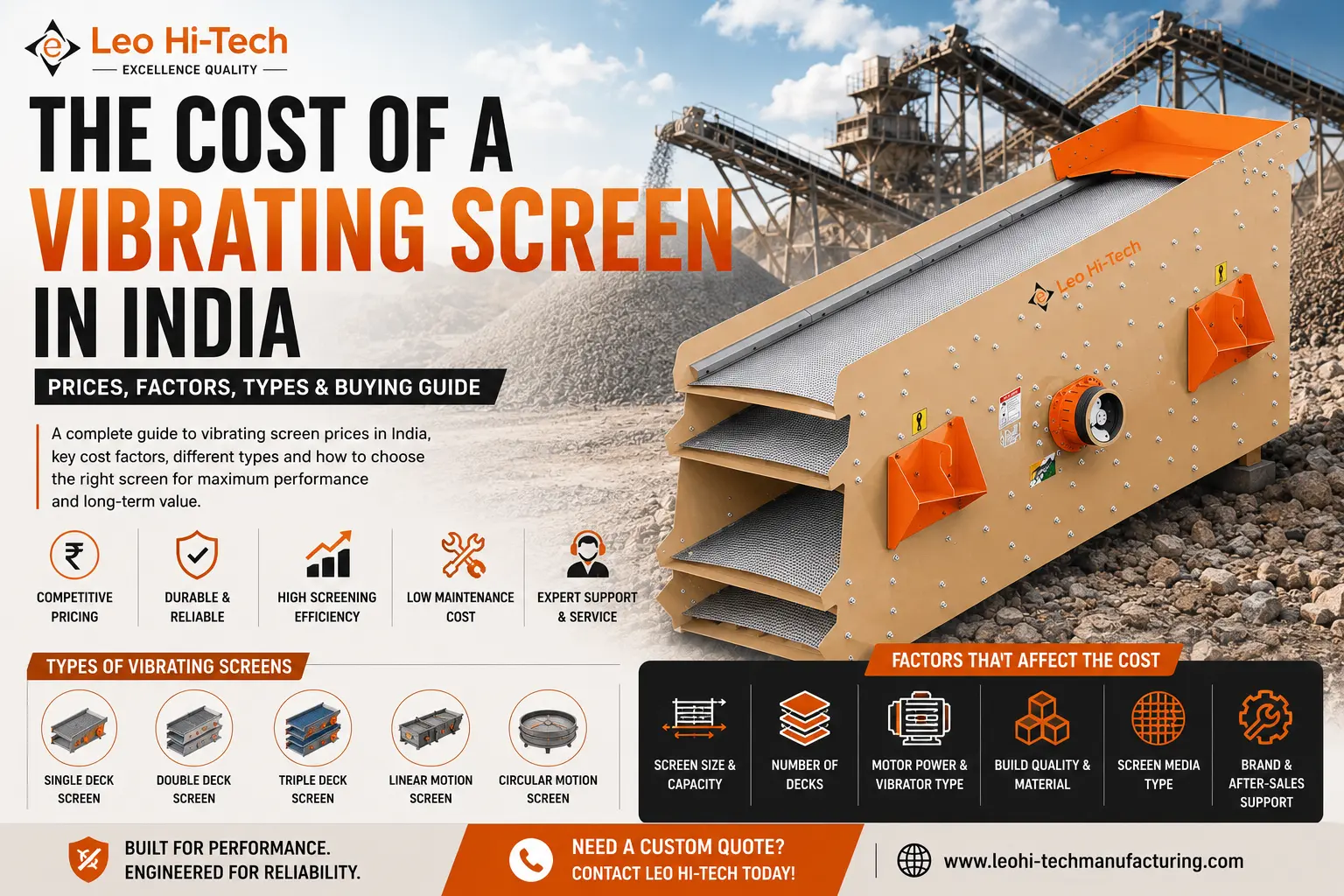
The cost of a vibrating screen in India generally ranges from ₹50,000 for a basic single-deck model up to ₹15,00,000 for a heavy-duty four-deck screen. The exact price depends on the production capacity (TPH), the number of decks, and whether it uses standard or high-frequency vibration.
If you are planning your budget for a new aggregate plant or replacing an old machine, it helps to know exactly what affects the price of a vibrating screen. This 2026 price guide will explain the different types of screens, how much they cost, the hidden running expenses you need to plan for, and why buying the cheapest option is rarely a good business decision.
Price Breakdown by Deck and Capacity
The biggest factor that changes the price of a vibrating screen is its physical size and the number of decks it has. A deck is simply the layer of mesh or screening material that the rock falls through.
More decks mean you can sort the rock into more sizes at the same time. For example, a single deck screen separates rock into two piles (oversized and undersized). A triple deck screen separates rock into four different piles. However, adding decks makes the machine taller, heavier, and more expensive to build and power.
Here is a general look at what you can expect to pay based on the number of decks and the machine’s capacity.
| Screen Type | Best Used For | Estimated Price in India (INR) |
| Single Deck Screen | Simple sorting tasks, removing very large dirt or oversized rocks early in the process. | ₹50,000 to ₹2,25,000 |
| Double Deck Screen | Standard plants making two final product sizes, or used after a primary jaw crusher. | ₹2,50,000 to ₹4,50,000 |
| Triple Deck Screen | Commercial aggregate plants needing multiple gravel sizes (like 20mm, 12mm, and 6mm). | ₹4,50,000 to ₹8,00,000 |
| Four Deck Screen | Large, high-capacity plants (over 200 TPH) require highly detailed sorting. | ₹8,00,000 to ₹15,00,000 |
Note: The prices listed above are estimates. The final quote you receive from a manufacturer will change based on the brand, the thickness of the steel used for the side plates, and the quality of the electric motors driving the machine.
Linear Vibrating Screens vs. Circular Vibrating Screens
Beyond the number of decks, the way the machine actually shakes will also influence its price. There are two main types of motion used in the aggregate industry.
Circular Vibrating Screens
This is the most common and standard type of screen used in stone crushing plants. A motor spins an off-center weight, causing the entire screen box to shake in a circular motion. Because the screen sits at a downward angle, gravity helps pull the rocks down the mesh as they bounce in a circle.
- Cost Factor: These are generally the most affordable type of screen for a standard plant. They are simple to build, easy to maintain, and excellent at sorting medium to large rocks.
Linear Vibrating Screens
Instead of sitting at a downward angle, a linear screen sits completely flat. It uses two vibrating motors spinning in opposite directions. This throws the rocks forward in a straight line, bouncing them down the deck.
- Cost Factor: Linear screens are often slightly more expensive than standard circular screens. They are best used when you need to sort smaller materials, remove water from wet sand, or if your plant has very little headroom and cannot fit an angled screen.
The Hidden Costs of Screen Media
When you buy a vibrating screen, the initial purchase price is just the beginning. The part of the machine that takes the most damage every single day is the screen media (the material with holes that does the actual sorting).
You will need to replace this media regularly, so it is very important to include it in your monthly operating budget. There are two main choices for screen media, and they have very different costs and benefits:
-
Woven Wire Mesh
This is the most common and traditional choice. It is made of thick steel wire woven together in a grid pattern.
- The Cost: Wire mesh is very cheap to buy up front.
- The Drawback: Steel mesh wears out quickly because hard rocks are constantly rubbing against it. You will have to stop the machine often to replace broken sections of mesh.
-
Polyurethane Panels
These panels are made from a thick, highly durable plastic material with precise holes molded into it.
- The Cost: They cost much more than steel mesh to buy initially.
- The Benefit: Polyurethane lasts much longer than steel. It also flexes slightly as the machine shakes. This flexing motion stops wet, sticky rocks from getting wedged in the holes. Over a full year, spending more money on polyurethane panels often saves the plant owner money because there is far less downtime for repairs.
Key Factors That Change the Total Cost
Besides the number of decks and the type of motion, a few other things will increase the final price you pay to get the machine running smoothly at your site.
1. Production Capacity (TPH)
A screen built to sort 50 Tons Per Hour (TPH) is relatively small and uses a lighter motor. A screen built to handle 300 TPH must be much wider and requires a heavy-duty steel frame and a massive motor to shake the extra weight. Higher capacity always means a higher purchase price.
2. Washing Systems
If you are making Manufactured Sand (M-Sand) or need very clean gravel for concrete, you will likely need to add a washing system to the screen. This involves installing steel pipes and high-pressure water spray nozzles right above the decks to wash the dirt off the rock as it bounces. Adding a wash kit will increase the total cost of the unit.
3. Installation and Steel Structure
A vibrating screen cannot sit directly on the ground. It has to be mounted high up in the air so that multiple conveyor belts can fit underneath it to catch the sorted rock. You must budget for the heavy steel support legs, safe walkways for the maintenance crew to stand on while working, and the concrete foundations.
Is a High-Frequency Screen Worth the Extra Money?
Most standard screens use a large motor to shake the entire heavy steel frame. However, there is a special type of machine called a high-frequency screen.
Instead of shaking the heavy outer frame, a high-frequency screen uses smaller motors to shake only the screen media itself. It vibrates much faster than a standard machine, creating an intense buzzing action on the surface.
- The Cost: High-frequency screens are generally more expensive to buy. Smaller units start around ₹1,50,000, and large industrial models can easily exceed ₹6,00,000.
- Why Pay More?: They are worth the extra money if you are sorting very fine materials, like manufactured sand, or if your material is slightly wet and sticky. Standard screens easily get plugged up (a problem called blinding) by wet sand. The rapid, buzzing vibration of a high-frequency screen keeps the holes clean and clear, ensuring your production line keeps moving without interruptions.
Why You Should Avoid Buying a Cheap Screen
When gathering quotes for a new plant, you will find some local workshops offering vibrating screens for prices that seem too good to be true. It is highly recommended to avoid these very cheap machines.
A vibrating screen is a machine designed to shake itself constantly all day long. If a manufacturer uses thin, low-grade steel to save money, the metal side plates will simply crack under the daily stress of the vibration. Fixing a cracked frame means stopping the entire plant for days to repair it properly.
Also, cheaper machines often use low-quality bearings inside the vibration motor. The bearings are the most important part of the machine’s moving system. If they fail, the screen stops moving completely. It is always better to pay a slightly higher price upfront for a machine built by a well-known manufacturer that uses thick steel and high-quality bearings. The extra money spent at the beginning is quickly recovered by having fewer breakdowns and a steady, reliable output of sorted rock.
Frequently Asked Questions
How much does a vibrating screen cost in India?
The price ranges from ₹50,000 for a simple single-deck model to over ₹15,00,000 for a large, heavy-duty four-deck screen. The total cost depends heavily on the machine’s size and production capacity.
What is the difference between a double-deck and a triple-deck screen?
A double-deck screen has two layers of mesh and sorts rock into three different sizes. A triple-deck screen has three layers of mesh and can sort rock into four different sizes at the same time.
Which is better: wire mesh or polyurethane screen panels?
Wire mesh is cheaper to buy at first but wears out quickly. Polyurethane panels cost more upfront but last much longer and are better at preventing wet materials from plugging the holes.
How do I choose the right size vibrating screen for my plant?
You choose the size based on the output of your crusher. If your crusher produces 150 Tons Per Hour (TPH), your vibrating screen must be wide enough to process that exact same 150 TPH without spilling rock over the sides.
Why is my vibrating screen getting clogged?
Screens usually clog when you process wet or sticky materials, like clay-heavy dirt. You can fix this by changing to polyurethane panels, increasing the vibration speed, or adding a water washing system to clean the rock as it moves.