In the mining and material processing industry, there are many different ways to break large rocks into smaller pieces. While some machines use high-speed impacts or heavy swinging plates, the roller crusher takes a much simpler approach. It uses steady, continuous pressure to squeeze materials until they break.
What is a roller crusher machine?
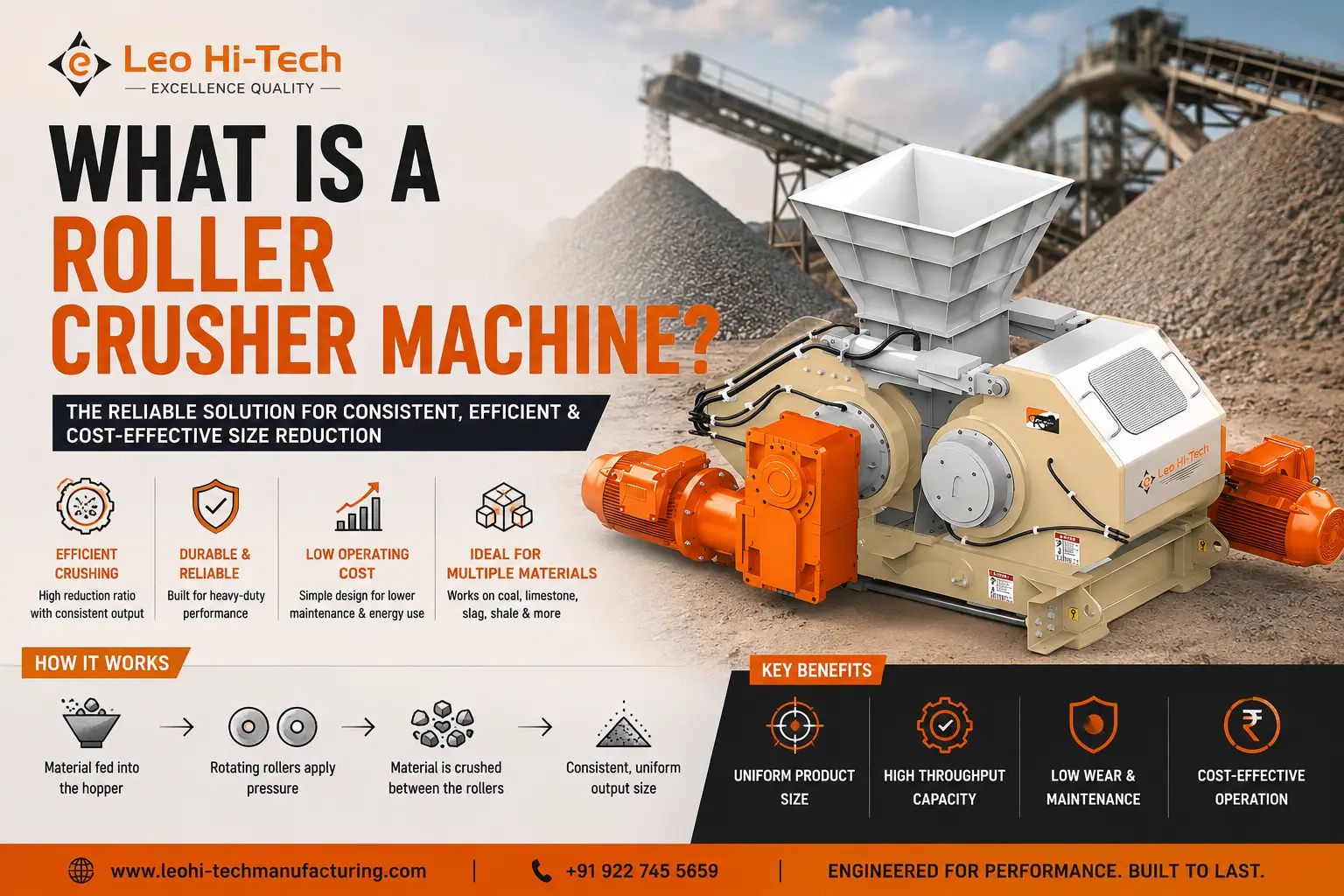
A roller crusher is a mechanical machine that reduces the size of rock or minerals by squeezing them between heavy, spinning metal cylinders (rollers). It is mostly used to crush soft to medium-hard materials like coal, clay, and limestone, and is known for producing very little dust.
If you are setting up a plant and need to process softer rocks, wet materials, or minerals where creating too much dust is a problem, the roller crusher is often the best tool for the job. This complete guide will explain exactly how a roller crusher works, the different types available, the materials it handles best, and its simple maintenance needs.
How Does a Roller Crusher Work?
The way a roller crusher works is very simple to understand. To picture the process, imagine taking two large wooden rolling pins, placing them side by side with a small gap in between, and spinning them toward each other. If you drop something into the gap, the rolling pins will grab it, pull it down, and squeeze it flat.
A roller crusher operates on this exact same idea, but on a massive, industrial scale.
The Step-by-Step Process:
-
Feeding the Machine: The raw material (like pieces of coal or lumps of clay) is dropped into the top of the machine through a feed chute.
-
The Nip Angle: As the material falls, it lands on the spinning metal rollers. Because the rollers are turning inward toward each other, their rough surfaces grip the material. This gripping action is known in the industry as the “nip angle.”
-
Compression (Squeezing): The spinning rollers actively pull the rocks down into the narrow space between them. Because the metal rollers are incredibly strong and heavy, the rock has nowhere to go. It is forced through the small gap and breaks simply because it is being squeezed so tightly.
-
Discharge: Once the material fractures and passes through the gap, it falls out of the bottom of the machine onto a conveyor belt, ready for the next stage of the plant.
Because the machine only uses a gentle squeezing motion rather than throwing or smashing the rock, it creates very little fine dust. This makes it a very clean and quiet machine compared to other crushers.
The Main Types of Roller Crushers
Not all roller crushers are built the same. Depending on the size of the plant and the type of material being processed, you can choose from a few different designs.
1. Single Roll Crusher
As the name suggests, this machine only has one spinning roller. Instead of squeezing the rock between two rollers, it squeezes the rock against a thick, curved metal plate (sometimes called a breaker plate) that sits next to the roller.
-
Best Use: Single roll crushers are usually used for the very first stage of crushing (primary crushing) for soft materials. They often have large teeth on the roller to help grab large chunks of material and pull them against the plate.
2. Double Roll Crusher
This is the most standard and widely used type of roller crusher. It features two rollers sitting side by side, spinning in opposite directions toward each other.
-
Best Use: Double roll crushers are excellent for secondary or final crushing. They are mostly used to take medium-sized rocks and crush them down into small, uniform gravel or coarse powder.
3. Smooth vs. Toothed Rollers
The surface of the rollers can be changed depending on what you need to do:
-
Smooth Rollers: These rollers have a flat, smooth metal surface. They are used when you need to crush material very finely, almost like grinding it. The gap between smooth rollers is kept very tight.
-
Toothed (Corrugated) Rollers: These rollers are covered in large metal bumps, ridges, or teeth. The teeth help the machine grip slippery, sticky, or large chunks of material. As the rollers turn, the teeth poke into the rock and help pull it down into the crushing gap. These are very popular in coal plants.
What Materials Are Best for a Roller Crusher?
Every crushing machine has a specific purpose. Just as you would not use a small hammer to break up a concrete driveway, you should not put the wrong type of rock into a roller crusher.
Materials It Handles Perfectly:
-
Coal: This is the most common use for a roller crusher. Coal is relatively soft and breaks easily under pressure. More importantly, coal dust is flammable and dangerous. Because roller crushers produce very little dust, they are the safest choice for coal mines.
-
Limestone and Chalk: These are soft sedimentary rocks that break apart easily when squeezed.
-
Wet and Sticky Clay: Many crushers get clogged if you put wet, muddy clay inside them. Roller crushers are excellent for sticky materials because as the rollers spin, they naturally scrape themselves clean. Often, a small metal scraper is attached under the roller to peel off any mud that sticks to it.
-
Salt and Fertilizers: These materials need to be broken down without turning them into useless fine powder, making the gentle squeezing action of the roller crusher ideal.
Materials It Cannot Handle:
-
Hard Granite or Basalt: A roller crusher is not designed for very hard rock. If you put hard river gravel or granite into it, the metal rollers will wear down completely flat in just a few days, ruining the machine.
-
Highly Abrasive Materials: Rocks with a lot of silica (sand) act like sandpaper. They will quickly rub away the surface of the rollers, leading to expensive repair bills. For hard and abrasive rocks, you always need a jaw crusher or a cone crusher instead.
Pros and Cons of a Roller Crusher
When planning a new material processing plant, it helps to look at a simple comparison of what the machine does well and where it falls short.
| Pros (Advantages) | Cons (Disadvantages) |
| Produces very little fine dust: The slow squeezing action keeps the air clean and prevents useful product from blowing away as dust. | Cannot crush hard rocks: Putting hard materials like granite inside will quickly damage the metal rollers. |
| Handles wet and sticky materials: The spinning rollers easily process muddy clay and sticky rocks without getting clogged up. | Low production rate (TPH): They process material much slower than a cone crusher, meaning they are not ideal for massive, high-speed plants. |
| Consistent product size: The rocks that come out the bottom are very uniform and closely match the exact size of the gap between the rollers. | Small feed size required: Unless you use a large toothed roller, smooth double rollers can only accept small pieces of rock. |
| Simple design: Because the machine is just a motor turning two heavy cylinders, everyday maintenance and greasing is very easy for the crew. | Frequent roller replacement: If you use the machine on abrasive materials, the cost to replace the metal rollers can become high. |
How to Adjust the Output Size and Safety Features
One of the best things about a roller crusher is how easy it is to control the size of the final product.
Adjusting the Gap
If you want to produce 20mm pieces of coal, you simply adjust the machine so that the gap between the two rollers is exactly 20mm wide. If you want smaller pieces, you move the rollers closer together. This is usually done by turning a set of large mechanical bolts or using a basic hydraulic pump that pushes one of the rollers forward.
The Safety Spring System
In any crushing plant, there is a chance that an uncrushable piece of metal (like a stray bolt or a broken tool from a loader) will accidentally fall onto the conveyor belt and drop into the crusher. If a thick piece of steel gets trapped between two solid metal rollers, the machine could break entirely.
To prevent this, roller crushers are built with a clever safety feature. While one roller is bolted firmly in place, the second roller is held in place by a set of very heavy, tight springs.
During normal rock crushing, the springs stay perfectly stiff. But if a hard piece of steel drops between the rollers, the pressure becomes too high. The heavy springs will temporarily compress, allowing the second roller to slide backward. This opens the gap just enough to let the piece of metal fall right through without damaging the machine. Once the metal falls out, the springs instantly push the roller back into its normal working position, and the machine continues crushing without needing to be stopped.
Frequently Asked Questions
What is the difference between a jaw crusher and a roller crusher?
A jaw crusher uses a swinging metal plate to crush large, hard rocks like granite. A roller crusher uses two spinning cylinders to gently squeeze softer materials like coal and clay, producing much less dust than a jaw crusher.
Can a roller crusher handle wet material?
Yes, it is excellent for wet material. The spinning motion of the rollers helps pull wet, sticky clay through the machine without clogging. Many models also feature metal scrapers that continuously clean mud off the rollers as they turn.
What industry uses roller crushers the most?
The coal mining industry uses them heavily because they do not create dangerous coal dust. They are also very popular in the cement manufacturing industry for breaking down soft limestone and clay before they are mixed.
How many rollers can a crusher have?
Depending on the design, they can have one, two, three, or even four rollers. A four-roller crusher simply stacks two sets of rollers on top of each other, crushing the material twice in a single pass to make it very fine.
How often do the rollers need to be replaced?
This depends entirely on the rock you are crushing. If you are crushing soft coal, the rollers can last for many months. If you accidentally use the machine to crush abrasive sand or gravel, the rollers might wear out in just a few days.