When setting up a material processing plant, making sure your rock is sorted into the correct sizes is just as important as crushing it. If you cannot separate the sizes accurately, you cannot provide the exact product your customers need. To do this sorting, plants use vibrating screens.
What is the difference between a high-frequency screen and a standard vibrating screen?
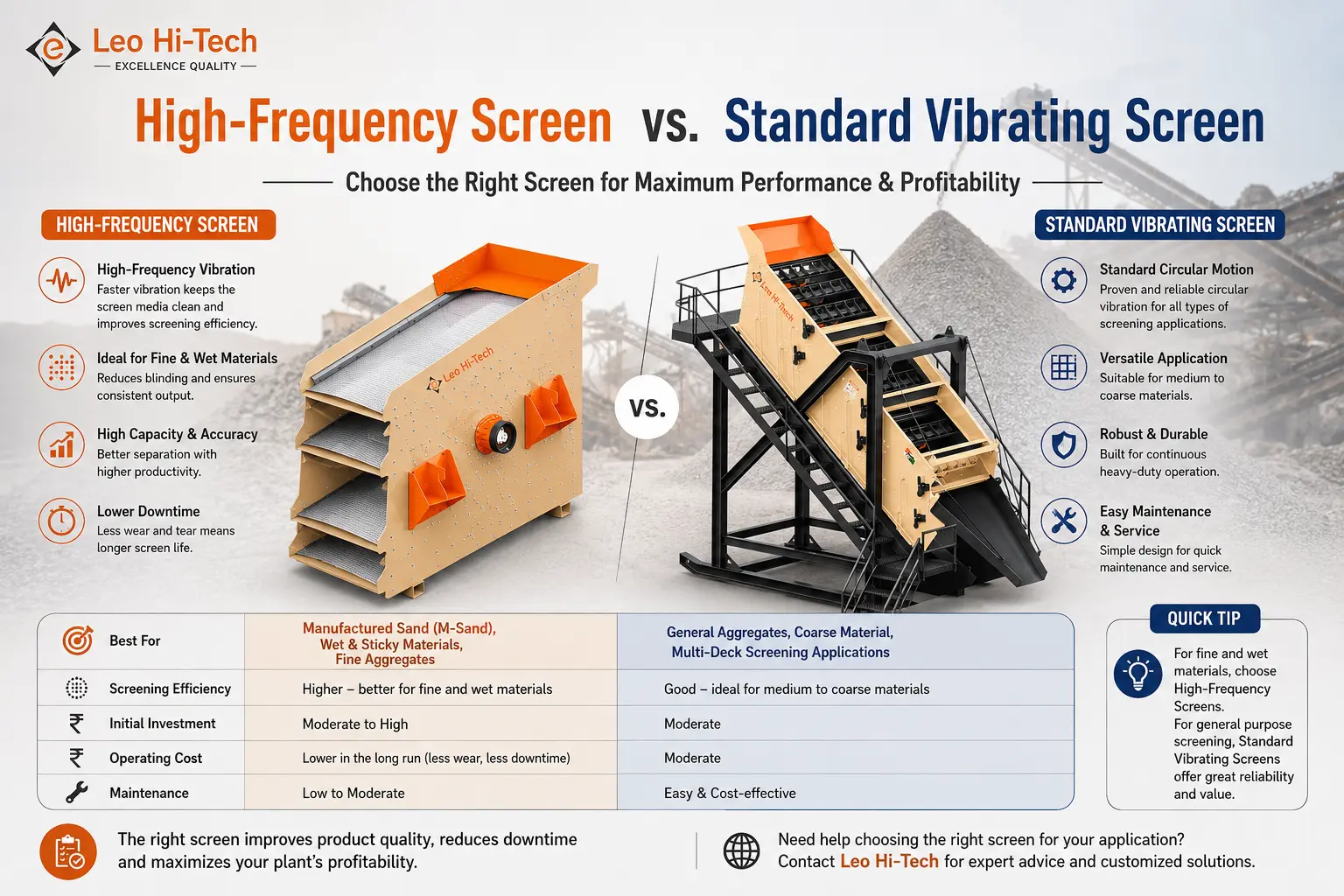
The main difference is how they vibrate and the size of the material they handle. A standard vibrating screen shakes the entire heavy metal box at 800 to 1,200 RPM for sorting coarse rock above 6mm. A high-frequency screen vibrates only the screen mesh at 3,000 to 3,600 RPM, making it the best choice for sorting fine materials and sand under 6mm.
However, not all screens are built the same. As you look at equipment options, you will find two main categories: standard vibrating screens and high-frequency screens. Understanding the difference between these two machines will help you decide which one is right for your specific materials, ensuring your plant runs smoothly and efficiently.
This guide explains the technical differences, how they move, and the pros and cons of each machine so you can make an informed choice for your operation.
The Core Difference: How They Move and Vibrate
At a basic level, both machines do the exact same job. They act as a giant sieve or filter. You pour mixed rock onto the top, the machine shakes, the small pieces fall through the holes, and the large pieces stay on top. The true difference lies in the mechanics of how that shaking motion is created.
The Standard Screen Action
A standard vibrating screen uses a large motor to shake the entire heavy steel frame of the machine. Imagine shaking a large baking sieve with both of your hands. The entire box, the side plates, and the mesh all move together in one large motion. This creates a large, sweeping stroke that easily tosses heavy rocks down the length of the machine.
The High-Frequency Screen Action
A high-frequency screen takes a completely different approach. Instead of shaking the heavy outer frame, the main frame of the machine stays mostly still. The machine uses small, specialized vibrating heads that are attached directly to the screen mesh itself. Instead of large sweeping motions, these motors create tiny, rapid, buzzing pulses directly on the surface where the rock sits.
Head-to-Head Technical Comparison
To better understand how these machines compare on a mechanical level, here is a breakdown of their primary features and running speeds.
| Feature | Standard Vibrating Screen | High-Frequency Screen |
| Vibration Speed | 800 to 1,200 RPM (Lower speed). | 3,000 to 3,600 RPM (High speed). |
| Movement Size (Stroke) | Large stroke (6mm to 12mm). | Tiny stroke (1mm to 2mm). |
| What Actually Vibrates? | The entire steel frame and the deck. | Directly on the screen mesh or cloth. |
| Best Material Size | Coarse to medium rock (6mm to 100mm+). | Fine material and sand (0.075mm to 6mm). |
| Main Use in a Plant | Sizing gravel after Jaw or Cone crushers. | Final sand washing, M-Sand, and dewatering. |
| Resistance to Clogging | Can clog easily with wet, fine dirt. | Rapid vibration stops fine, wet dirt from sticking. |
Pros and Cons of Standard Vibrating Screens
- The standard vibrating screen is the most common machine you will see in any aggregate plant around the world. It is a proven, reliable piece of equipment designed to handle heavy workloads.
How it Works in Practice
- Material drops from a conveyor belt onto the top end of the screen. Because the entire machine is shaking with large movements and sits at a slight downward angle, the rocks bounce their way down to the bottom end. The large bouncing action is necessary to flip the rocks over, giving every stone a chance to find a hole and fall through.
Pros of a Standard Screen
- Handles Heavy Loads: These machines are built with thick steel and can take the impact of large, heavy rocks dropping directly from a primary or secondary crusher.
- Lower Initial Price: Because the design is relatively simple and uses standard electric motors, they are generally more affordable to purchase than high-frequency models.
- Simple Maintenance: The mechanics are straightforward. Keeping the bearings greased and replacing the large screen mesh is a routine task that most plant workers can handle easily.
- Versatile: They are excellent at sorting a wide variety of medium to large products, such as 10mm, 20mm, and 40mm gravel used for road bases and concrete mixing.
Cons of a Standard Screen
- Struggles with Fine Materials: When you try to sort very small particles (like sand under 4mm), the large bouncing motion is actually a disadvantage. The tiny sand grains bounce too high and skip right over the holes instead of falling through.
- Prone to Clogging: If the material you are processing is slightly wet or has a lot of sticky clay, the fine dirt will quickly coat the wire mesh. The holes will plug up entirely, a problem known as blinding. Once the screen is blinded, no material can fall through, and the machine must be stopped and cleaned.
- Heavy Structural Stress: Because the entire heavy steel frame is shaking constantly, the machine puts a lot of stress on its own side plates and the steel support legs underneath it.
Pros and Cons of High-Frequency Screens
- While standard screens handle the heavy work, high-frequency screens are special tools designed for precision. They solve the exact problems that standard screens struggle with.
How it Works in Practice
- When fine, slightly damp sand is placed on a screen, the water creates surface tension, causing the sand grains to stick together in clumps. The rapid, high-speed buzzing of a high-frequency screen (vibrating over 3,000 times per minute) instantly breaks that surface tension. The clumps of sand fall apart, and the tiny grains easily slip through the mesh openings.
Pros of a High-Frequency Screen
- Outstanding for Fine Sorting: There is no better machine for sorting tiny particles. They easily separate fine sand and dust that a standard screen would miss.
- Prevents Clogging: The intense, rapid vibration directly on the wire mesh makes it almost impossible for wet dirt or clay to stick to the wires. The holes stay clean and open, meaning you do not have to stop the plant to clean the screen.
- Less Structural Stress: Because the heavy outer frame of the machine is not shaking, there is far less stress on the side plates and the support structure. This often leads to a longer lifespan for the main body of the machine.
- Higher Product Quality: By removing the unwanted fine dust so efficiently, the final product (like manufactured sand) is much cleaner and meets higher quality standards for buyers.
Cons of a High-Frequency Screen
- Cannot Handle Large Rocks: You cannot drop large, heavy rocks onto a high-frequency screen. The delicate vibrating heads and thin wire mesh would be damaged immediately. They must only be fed pre-crushed, small materials.
- Higher Purchase Price: The specialized vibrating motors and the advanced design make these machines more expensive to buy initially.
- Requires Careful Setup: Setting up the machine requires more attention to detail. The tension of the screen mesh must be perfect for the vibrating heads to work correctly.
When Should You Choose a High-Frequency Screen?
Making the choice to invest in a high-frequency screen depends entirely on the material you are selling and the problems you are facing in your plant. You should choose this machine if your operation fits the following situations:
- Manufactured Sand (M-Sand) Production: M-Sand is a highly profitable product, but it must meet strict rules regarding how much fine dust it contains. A high-frequency screen is the best tool for removing micro-fines (dust particles smaller than 75 microns) to ensure your sand passes quality tests.
- Processing Damp or Sticky Materials: If your raw material naturally contains moisture, or if you are working during the rainy season, a standard screen will clog constantly. A high-frequency screen will power through damp material, keeping your production line moving.
- Dewatering Tasks: If you use water to wash your sand, the final product will be a wet slurry. A high-frequency screen is often used at the very end of the washing process to rapidly shake the water out of the sand, leaving you with a dry, clean product ready to sell.
When Should You Stick with a Standard Vibrating Screen?
Despite the advanced features of high-frequency models, standard vibrating screens are still the backbone of the crushing industry. You should choose a standard screen if your needs match these conditions:
- Coarse Aggregate Sizing: If your main business is producing standard gravel sizes like 10mm, 20mm, and 40mm for local construction, a standard screen will do the job perfectly and at a lower cost.
- Heavy Duty Scalping: If you need a screen to sit directly after a primary jaw crusher to sort out large, heavy rocks, you must use a standard, heavy-duty vibrating screen. A high-frequency screen would break under the weight.
- Working with Dry, Clean Rock: If your raw material is very hard, dry, and free of sticky clay, clogging will not be an issue. In this case, the extra cost of a high-frequency screen is not necessary.
- Simple Budget Constraints: If you are building a basic plant and do not need to separate extremely fine sand, a standard screen offers the best value for your initial investment.
Frequently Asked Questions
Can a high-frequency screen replace a standard vibrating screen?
No, they do different jobs. A standard screen is needed first to remove the large and medium rocks. The high-frequency screen is placed at the end of the line to sort the leftover fine materials.
Why does a high-frequency screen prevent mesh clogging?
It vibrates the mesh so fast (over 3,000 times a minute) that wet dirt and clay cannot grip the metal wires. The rapid buzzing motion instantly breaks apart clumps of wet sand.
What speed does a high-frequency screen operate at?
They operate at very high speeds, usually between 3,000 and 3,600 Revolutions Per Minute (RPM). In contrast, a standard vibrating screen operates much slower, between 800 and 1,200 RPM.
Is a high-frequency screen good for Manufactured Sand (M-Sand)?
Yes, it is the ideal machine for M-Sand. It effectively removes unwanted ultra-fine dust from the sand, ensuring the final product meets strict construction and concrete mixing standards.
Does a high-frequency screen use more power?
Generally, they are very energy efficient. Because they only shake the light wire mesh instead of moving the entire heavy steel frame of the machine, they often use smaller motors that draw less total electricity.